This post has been republished via RSS; it originally appeared at: Windows Blog.
As a kid, Charles Taylor was always interested in tech – though he didn’t know exactly what that meant, beyond translating to a job related to computer science. Growing up in Littleton, North Carolina – an actual little town with less than 700 people – he went to school with the same group of about 60 kids through high school graduation. He would be one of the first in his family to attend college. Taylor went to Duke University. He took classes in computer science, visual and media studies and information science, trying to get a feel for a future career. He questioned whether it was the right fit. Then a work-study program at a Duke University medical center connected him with a mentor, an IT chief who took him under his wing and opened him up to new possibilities, in product management. He introduced Taylor to new design prototyping tools and encouraged him to talk to people and come up with solutions to their problems using those tools – a mindset he’s adopted into his daily workflow. “As all the pieces started to come together, I realized he was starting to show me what it could look like to be in the tech industry through a different lens, exposing me to other paths,” Taylor says. “He was the first one to put it in my head that I didn’t need to be a software developer or a technical expert to be successful in the industry.” Christian Valencia (Photo by Christian Valencia)[/caption]
His first job after graduating from college – where he started as a business major before an advertising class converted him to the more creative field of design – was at a small-to-medium-sized company, creating Windows apps. While he was there, he entered a workout fitness app in a design contest and won, catching the eye of a contest judge. She asked to see his portfolio, which led to a job offer at Microsoft. In a stroke of serendipity, she would be one of his first managers there.
And at Microsoft, he feels like he’s come full circle, having worked on many features related to Windows. The last 18 months have made the PC more relevant and vital in our lives than ever before, bolstered by Chief Product Officer Panos Panay focusing the team on rejuvenating Windows with what would become Windows 11.
“It was all hands on deck – and everything is still that way,” Valencia says. “We were on overdrive during the beginning of Windows 11. We embraced a fail-fast approach, super into prototyping, making on the fly, garnering feedback from the team. With Start, there were so many iterations, and it will get progressively better.”
Like many other people when lockdowns were imposed, he created a PC set-up at home, with constant communication with teammates on Microsoft Teams. They continuously gathered feedback and kept revising and improving.
To further spur his creativity, he takes inspiration from illustrations unrelated to operating systems or mobile devices: abstract/fun art, such as those that include French bulldogs (he has one).
“I’m always making stuff on my own,” Valencia says. “Our design director is always telling us to be making something, be ready to share something. So I live that.”
Christian Valencia (Photo by Christian Valencia)[/caption]
His first job after graduating from college – where he started as a business major before an advertising class converted him to the more creative field of design – was at a small-to-medium-sized company, creating Windows apps. While he was there, he entered a workout fitness app in a design contest and won, catching the eye of a contest judge. She asked to see his portfolio, which led to a job offer at Microsoft. In a stroke of serendipity, she would be one of his first managers there.
And at Microsoft, he feels like he’s come full circle, having worked on many features related to Windows. The last 18 months have made the PC more relevant and vital in our lives than ever before, bolstered by Chief Product Officer Panos Panay focusing the team on rejuvenating Windows with what would become Windows 11.
“It was all hands on deck – and everything is still that way,” Valencia says. “We were on overdrive during the beginning of Windows 11. We embraced a fail-fast approach, super into prototyping, making on the fly, garnering feedback from the team. With Start, there were so many iterations, and it will get progressively better.”
Like many other people when lockdowns were imposed, he created a PC set-up at home, with constant communication with teammates on Microsoft Teams. They continuously gathered feedback and kept revising and improving.
To further spur his creativity, he takes inspiration from illustrations unrelated to operating systems or mobile devices: abstract/fun art, such as those that include French bulldogs (he has one).
“I’m always making stuff on my own,” Valencia says. “Our design director is always telling us to be making something, be ready to share something. So I live that.”
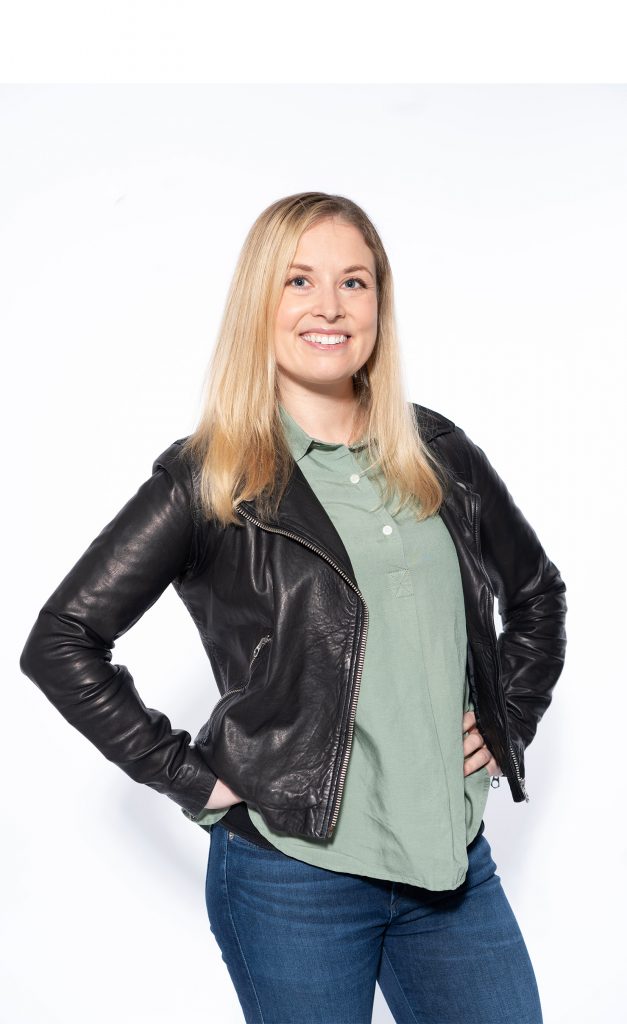 Christina Koehn (Photo by Ulysses Curry)[/caption]
After that, she landed a contract role at Microsoft that turned into a full-time position. This fall, she will celebrate her 12th anniversary with the company.
She’s worked on Bing, Bing apps for Windows 8 (her introduction to the Windows ecosystem), Windows 10, MSN, the Edge browser and the Microsoft Store. And over the years, she saw how the company’s growth mindset propelled teams to work together, culminating in Windows 11.
“We are all working for our customers, trying to solve problems, to do what’s right for people using our products,” Koehn says. “Marketing, developers, PMs – all these different disciplines came together to make this product. We took advantage of the brain trust in the diversity of people throughout the company and focused on the needs of customers. As designers, we have empathy for the people we’re designing for. Not that we haven’t done it in the past, but we really pointed the focus on human needs first.”
Koehn built upon the Fluent design style Windows 10 introduced (after the Metro design style of Windows 8), signatures of which include added depth, light and color in icons, rounded corners, fewer pixels – overall a softer, more simplified feeling. At the same time, she considers it a visual rejuvenation. Her team focused on fonts, typography and iconography.
“We want people to feel more comfortable,” Koehn says. “What people need is their computing to adapt to them. An operating system like Windows, it’s got over a billion people using it. Computing really can empower people and must adapt to scale for all different needs.”
Find out more about Windows 11 and stay tuned for more stories about the people bringing Windows 11 to you.
Top Photo: Charles Taylor (Photo by Ulysses Curry)
Christina Koehn (Photo by Ulysses Curry)[/caption]
After that, she landed a contract role at Microsoft that turned into a full-time position. This fall, she will celebrate her 12th anniversary with the company.
She’s worked on Bing, Bing apps for Windows 8 (her introduction to the Windows ecosystem), Windows 10, MSN, the Edge browser and the Microsoft Store. And over the years, she saw how the company’s growth mindset propelled teams to work together, culminating in Windows 11.
“We are all working for our customers, trying to solve problems, to do what’s right for people using our products,” Koehn says. “Marketing, developers, PMs – all these different disciplines came together to make this product. We took advantage of the brain trust in the diversity of people throughout the company and focused on the needs of customers. As designers, we have empathy for the people we’re designing for. Not that we haven’t done it in the past, but we really pointed the focus on human needs first.”
Koehn built upon the Fluent design style Windows 10 introduced (after the Metro design style of Windows 8), signatures of which include added depth, light and color in icons, rounded corners, fewer pixels – overall a softer, more simplified feeling. At the same time, she considers it a visual rejuvenation. Her team focused on fonts, typography and iconography.
“We want people to feel more comfortable,” Koehn says. “What people need is their computing to adapt to them. An operating system like Windows, it’s got over a billion people using it. Computing really can empower people and must adapt to scale for all different needs.”
Find out more about Windows 11 and stay tuned for more stories about the people bringing Windows 11 to you.
Top Photo: Charles Taylor (Photo by Ulysses Curry)